

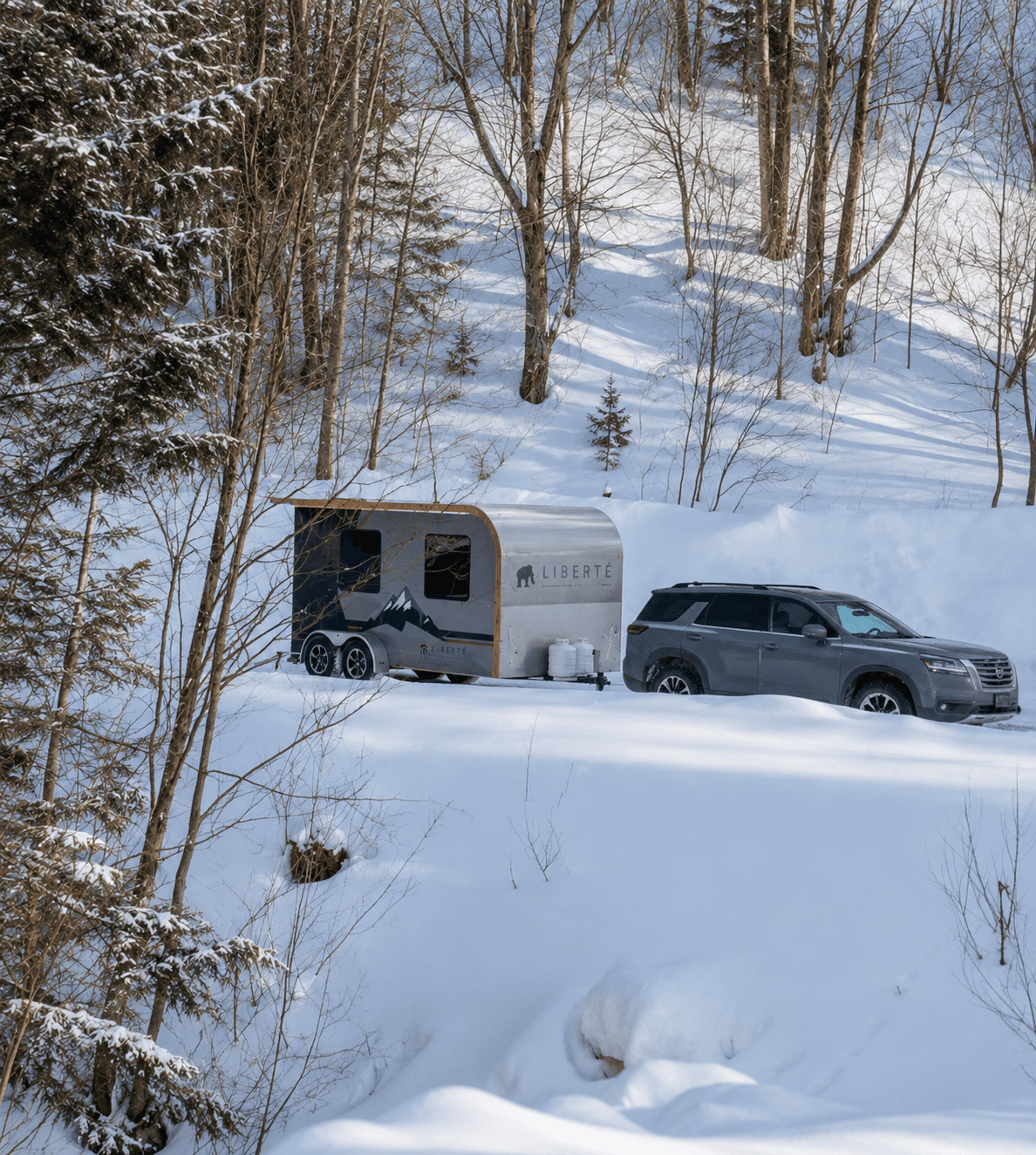
Picture this: it’s -20°C outside, the snow squeaks under your boots after a full day on the slopes at Mont-Tremblant, and instead of driving two hours home in the dark, you’re thirty feet from the lift, sinking into a hot shower before dinner. That’s the promise of a four-season trailer – but only if it’s actually built for a Quebec winter, not just labeled for one.
Quebec’s ski season is long and genuinely cold, from Mont-Sainte-Anne and Le Massif de Charlevoix to Stoneham, Bromont, and Owl’s Head. A trailer that’s fine for fall camping in Ontario can turn into an ice box the moment temperatures drop below -15°C. Here’s what actually matters when you’re shopping.
Insulation Is the Whole Ballgame
Most “four-season” trailers on the market are three-season units with a space heater bolted on. The giveaway is the R-value – the number that tells you how well the walls, floor, and roof resist heat loss. For real Quebec winters, look for R20 or higher across all three surfaces, not just the walls. A trailer insulated only in the walls will still lose most of its heat through an underbelly that was never designed to be lived in below freezing.
Liberté Caravans’ SNØ Arctic Caravan, for example, is built to R20 on walls, floor, and roof specifically because it’s engineered in Canada for Canadian winters, not adapted from a warm-weather design.
Heating and Water Systems That Won’t Quit at -25°C
Insulation keeps heat in, but you still need a reliable way to generate it. Ask what heating system is standard, how it performs in extended sub-zero conditions, and whether the plumbing and holding tanks are protected from freezing – a frozen water line or waste tank can end a ski weekend fast. A well-designed winter trailer routes and insulates these systems as part of the build, not as an afterthought.
Enough Power to Camp Off-Grid
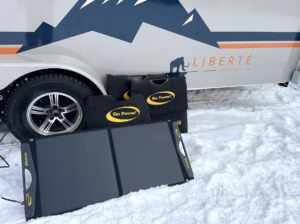
Some of the best ski access spots in Quebec – forestry roads near Charlevoix, backcountry pull-offs near the Chic-Chocs – don’t have hookups. If you want the freedom to park where the snow (and the parking is free), look for a trailer with genuine off-grid capability: solar input, battery capacity that can run heat and lighting overnight, and a design that doesn’t assume you’ll always be plugged into shore power.
Size and Weight You Can Actually Tow
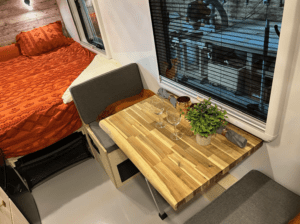
A trailer is only as useful as the vehicle that can pull it through a snowstorm. Check the base weight and GVWR against your tow vehicle’s rated capacity, especially since winter driving conditions already reduce your margin for error. A compact four-season trailer in the 3,500–4,000 lb range with a 7,000 lb GVWR, roughly 21 feet long, is manageable behind a mid-size SUV or half-ton truck while still fitting a king bed and a proper dinette – no need to size up just to stay warm.
Storage for Skis, Boots, and Wet Gear
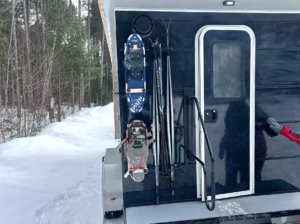
Ski trips generate a lot of bulky, wet gear that has nowhere pleasant to go in a typical trailer layout. Look for dedicated storage units or cabinetry that can handle skis, boots, and layers without turning the living space into a gear locker. A live-edge kitchen cabinet and a real storage unit, not just under-bed cargo space, make a noticeable difference on a multi-day ski trip.
Comfort Details That Matter More in Winter
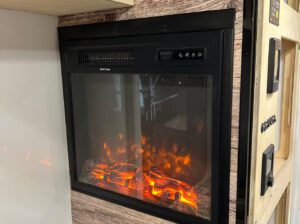
Small things count for more when you’re spending long, dark evenings inside after a day on the hill. An electric fireplace adds ambiance and supplemental heat without running the furnace all night. A convertible dinette that seats six during après-ski but folds down for two at breakfast makes a small footprint feel bigger. These aren’t luxuries – they’re what makes a trailer livable for a full winter weekend rather than just survivable.
Warranty and Where It’s Built
Ask where the trailer is manufactured and what warranty backs it. A trailer built in Canada, tested against Canadian winters, and backed by a multi-year warranty (five years is a strong benchmark) tells you the manufacturer expects it to actually perform in the conditions you’re buying it for.
Questions to Ask Before You Buy
Before signing anything, here are the key points to confirm with the seller or manufacturer:
- Has the trailer been tested at temperatures below -20 °C?
- What is the warranty on the heating system and insulation?
- Are the pipes protected against continuous freezing?
- Does the manufacturer offer after-sales technical support?
During the SNØ trailer demonstration events in Larose Forest, cross-country skiers, fat bikers, and snowshoers experienced firsthand how a self-sufficient, well-heated trailer can transform a winter outdoor adventure.