

It’s a question that comes up all the time, especially among people just discovering the world of recreational vehicles: is it actually possible to camp in winter with a trailer in Quebec? The short answer is yes, but not with just any trailer, and not without a minimum of preparation. If you’re curious and don’t know where to start, this guide is for you. And if you’re looking for an arctic caravan built for Canadian winters, Liberté Caravans can help.
The Difference Between a Three-Season and a Four-Season Trailer
This is the first thing to understand before anything else. The vast majority of trailers sold in Canada are three-season models, built for spring, summer and fall. They have minimal insulation, no pipe freeze protection, and heating systems that barely hold up on a cool September night. Taking one out in January in Quebec is a recipe for costly damage and a very uncomfortable stay.
A four-season trailer is a completely different animal. It’s built with serious insulation, a heating system that performs even below -20 °C, double-pane windows, and freeze-protected pipes. That’s the type of trailer this guide is about, and the only type that will let you camp in winter safely and comfortably.
What to Check Before Your First Winter Stay
Before heading out for the first time in winter, there are a few basics to confirm. The most important is your heating system: is it designed to run at low temperatures? Are your water tanks insulated or heated? Do the pipes have integrated heat trace wiring? These questions might sound technical, but they’re the difference between a successful trip and a disastrous weekend.
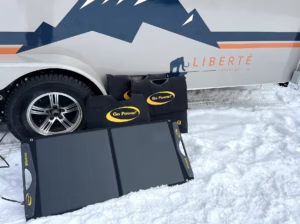
Next, think about your power source. If you’re hooked up to the electrical grid at a campground, it’s simple. But if you’re planning to set up somewhere without services, near a cross-country ski trail or in a regional park, you’ll need a self-sufficient trailer with batteries and possibly solar panels rated for cold weather. To see what that looks like in practice, take a look at the SNØ caravan specifications, designed specifically for these conditions.
Condensation: The First Challenge for Beginners
If you’re winter camping for the first time, condensation will catch you off guard. It’s the moisture that forms on cold surfaces, windows, walls, cabinets, when warm interior air touches them. It comes from breathing, cooking, showering, and bringing in wet gear after a day outside. In a well-insulated trailer with good ventilation, it’s easy to manage. In a poorly equipped one, it quickly becomes a mold problem.
The most effective solution is running a small dehumidifier continuously. Ventilating after showering and cooking also makes a big difference. And if your trailer is equipped with diesel heating rather than propane, you’re already at an advantage, diesel doesn’t produce water vapour when it burns, unlike propane.
Dressing and Gearing Up to Sleep Warm
Even in a well-heated trailer, winter nights require a little preparation on the bedding and clothing front. A good four-season sleeping bag or thick wool blankets is the baseline. Some people also like to keep a warm sweater within reach for the mornings, while the heater climbs back up after the night. Also think about your boots and wet clothing, bringing them inside to dry produces a lot of humidity. A small covered vestibule or outdoor storage rack makes a big difference.
Where to Camp in Winter in Quebec?
Quebec offers several options for beginner winter campers. Sépaq national parks like Parc national du Mont-Tremblant, Jacques-Cartier and Frontenac open their sites in winter with RV spots. Many offer electrical hookups, which simplifies things for a first stay. Private campgrounds open in winter are rarer, but they do exist, especially in popular ski regions like the Laurentians and the Eastern Townships.
For a first try, a site with electrical hookup in an organized park is ideal. You’ll have access to sanitary facilities, a reliable power source, and often experienced neighbours nearby to give you a hand if needed.
Mistakes to Avoid as a Beginner
Beginners tend to make the same mistakes. The first is using a three-season trailer thinking a small space heater will compensate, it won’t, and it can be dangerous. The second is ignoring condensation until it causes damage. The third is heading out without checking that the pipes and tanks are freeze-protected, an oversight that can cost a lot in repairs come spring.
The good news is that all of these mistakes are easy to prevent with the right trailer and a little preparation. If you’re shopping for your first four-season trailer, ask specific questions about insulation, heating and freeze protection, a serious seller will have the answers. You can also book a visit to see the SNØ in person and ask all your questions directly with the team.