

Airstream is one of the most recognized names in travel trailers. The aluminum shell has been rolling down North American roads since the 1930s, and for good reason, it’s durable, it holds its value, and it carries a culture of adventure that few brands can match.
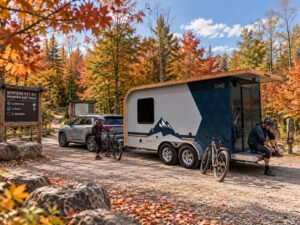
The SNØ is newer, quieter, and Canadian. It was built by a mechanical engineer who spent years working on radar sites in the Canadian Arctic, and who couldn’t find a trailer that worked properly in a Quebec January. So he built one. Learn more about SNØ travel trailer.
These are both premium trailers. Neither is the budget option. But they were designed for fundamentally different climates, and that difference shows up in every specification that matters for winter camping in Canada.
Where the Gap Is Widest
This is the most important number for anyone camping below freezing, and it’s where the two trailers diverge most sharply.
Airstream’s iconic aluminum shell is not an insulating structure. The aircraft-grade aluminum is thin by design, it’s what keeps the trailer lightweight and aerodynamic. According to owners and Airstream forum discussions, the factory fiberglass insulation runs approximately R-6.3 in the walls, with thermal bridging through the aluminum ribs pulling the effective value lower. The floor uses bubble foil, which Airstream owners consistently describe as single-digit R-value in real conditions.
The SNØ delivers R-20 throughout, walls, floor, and ceiling, the same rating used in Canadian residential construction for cold climates. That’s not a marginal improvement over the Airstream. It’s a different category of thermal performance.
For context: a well-insulated Canadian home targets R-20 to R-24 in the walls. The SNØ meets that standard.
Winter Performance, Design Intent vs. Retrofit
Airstream is marketed as a four-season trailer, and in mild winter conditions it performs adequately. But its thermal envelope was designed around the American Southwest, not the Canadian Shield. Owners who push Airstreams into serious cold, sub −15 °C, sustained, routinely report needing aftermarket insulation additions, window insulation kits, and tank heater upgrades to keep the system functional.
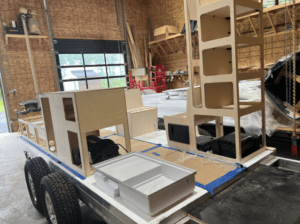
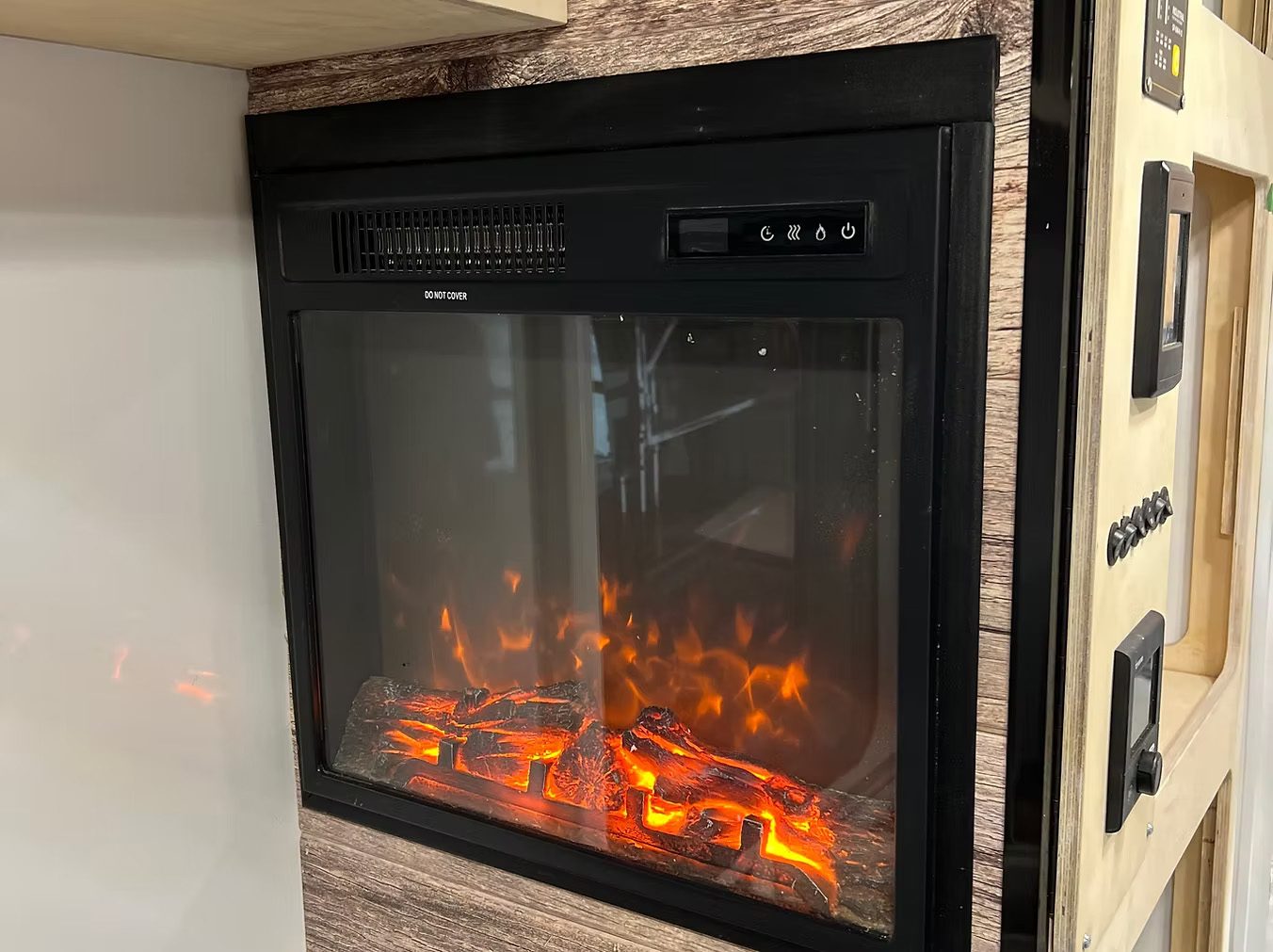
The SNØ was engineered baseline for −30 °C Canadian winters. The underbelly is fully enclosed and insulated from the factory, protecting tanks and water lines without heat tape or workarounds. The integrated electric fireplace provides radiant heat that runs efficiently on shore power or a battery system. Combined with a propane furnace as backup, the SNØ offers genuine redundancy for off-grid winter use, not a single-source heating system that runs until the propane runs low.
Propane vaporization also drops significantly below −18 °C, reducing a furnace’s effective output on the coldest Canadian nights. A heating system that depends entirely on propane in those conditions is a single point of failure. The SNØ’s dual-source approach addresses that directly.
Off-Grid Capability, Pre-Wired vs. Pre-Designed
Both trailers appeal to adventurers who want to get away from hookups. The approach each takes is different.
Airstream has moved aggressively into off-grid features in recent years. The 2024 Trade Wind starts at $129,400 USD and includes a substantial battery bank and solar system. For buyers who want a polished, off-grid-capable Airstream, the option exists, at significant cost.
The SNØ is pre-wired for a full off-grid build at $74,900 CAD. Solar integration, battery expansion, and off-grid systems are designed in from the start, not bolted on to justify a higher trim price. For Canadian buyers who want genuine winter off-grid capability without crossing into six-figure USD territory, the SNØ’s price-to-capability ratio is difficult to match. See full SNØ specifications and pricing
Where It’s Built and Who Services It
Airstream is manufactured in Jackson Center, Ohio. It has an extensive authorized dealer network across North America, which means warranty service is generally accessible, but it also means parts and support cross an international border for Canadian owners. Currency exchange, parts availability, and warranty logistics add friction that Airstream owners in Canada know well.
The SNØ is built in Limoges, Ontario, in small batches, by a team that camps in the trailers they build. Service, parts, and warranty support stay in Canada. For buyers in Quebec and Ontario especially, that’s not a minor point, it’s the difference between a phone call and a border crossing.
Warranty, 2 Years vs. 5 Years
Airstream updated its warranty for Model Year 2026: buyers now receive a 2-year bumper-to-bumper limited warranty and a 5-year structural warranty covering the chassis, subfloor, framing, aluminum walls, and roof.
The SNØ carries a 5-year full warranty, not split between bumper-to-bumper and structural. For a trailer built to handle decades of Canadian winters, that unified coverage reflects a different level of manufacturing confidence.