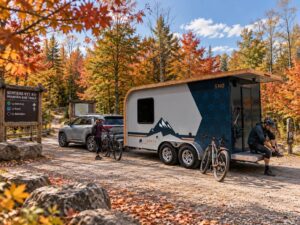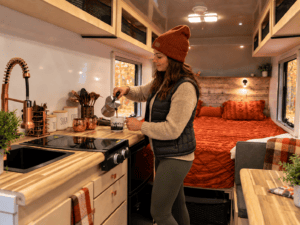


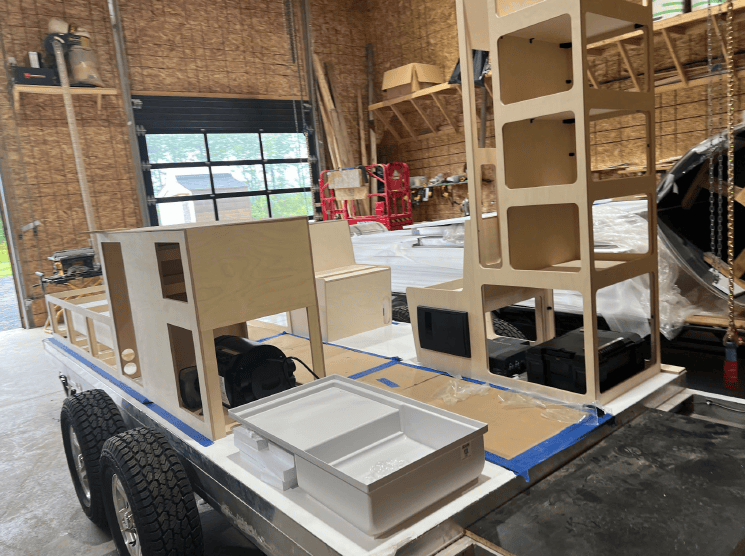
SNØ cabinetry and interior structures during assembly in Eastern Ontario.
A Canadian name, a maple leaf and a local showroom can all suggest a Canadian RV. But they do not tell you where the trailer was designed, where its parts were made or where its construction happened. Before buying, ask what each claim actually describes. That is the clearest way to understand where your money and the work behind your RV go.
OWNERSHIP AND DESIGN
Canadian ownership tells you who runs a company. Canadian design tells you where people developed its layout, structure and systems. Neither, on its own, identifies where the finished RV was built. At Liberté Caravans, the design work for the SNØ is carried out by our team in Eastern Ontario, close to the people who assemble it. That connection lets design decisions be checked against the reality of the workshop.
ASSEMBLY AND THE PEOPLE DOING THE WORK
Ask where the shell, cabinetry and systems come together, and who does the work. All labour to design and assemble the SNØ is local to Eastern Ontario. Assembly is more than attaching a badge to a completed trailer: it is where the structure, interior and equipment become one finished RV. Still, “assembled in Canada” describes a process; it does not mean every part originated here.
FOLLOW THE MAJOR COMPONENTS
The SNØ has a supply story we can explain in specific places. The birch plywood for its cabinetry is bought in Ottawa. Its aluminum frame is made in Montréal, its axles in Québec, and its walls and floors in Oka. Buying plywood in Ottawa identifies the supplier location; it does not, by itself, establish where the
plywood was manufactured or where the birch grew. Likewise, a Canadian-made assembly can contain materials or smaller parts sourced elsewhere.
This is why a useful answer names the component and the activity: designed here, fabricated there, purchased from this supplier, assembled in this workshop. It is more informative than a single flag on a brochure.
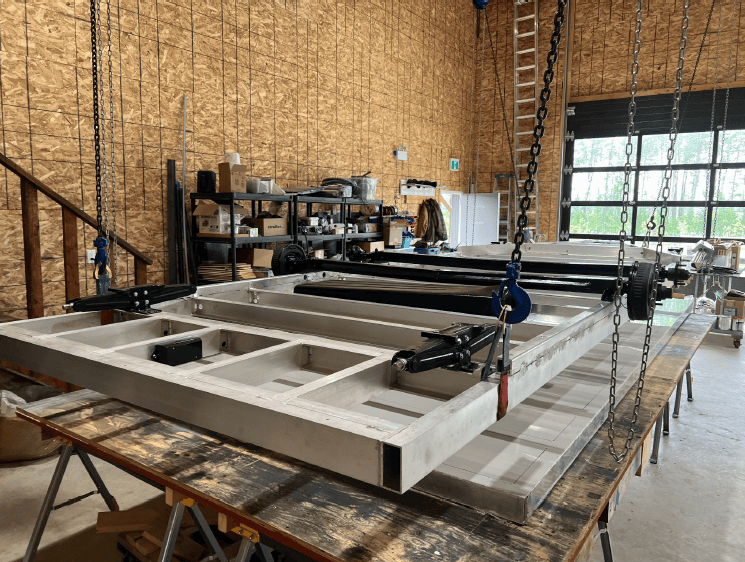
The aluminum frame and axle assembly in the SNØ workshop.
This is why a useful answer names the component and the activity: designed here, fabricated there, purchased from this supplier, assembled in this workshop. It is more informative than a single flag on a brochure.
WHAT DOES “MADE IN CANADA” MEAN?
For non-food products, the Competition Bureau’s guidance distinguishes “Made in Canada” from “Product of Canada.” Its approach to a “Made in Canada” claim looks for the last substantial transformation in Canada, at least 51% of direct production costs incurred here, and a suitable statement about imported content. “Product of Canada” has a higher, 98% direct-cost threshold. Those are tests for an overall product claim, not conclusions you can draw from a Canadian address or a few Canadian components.
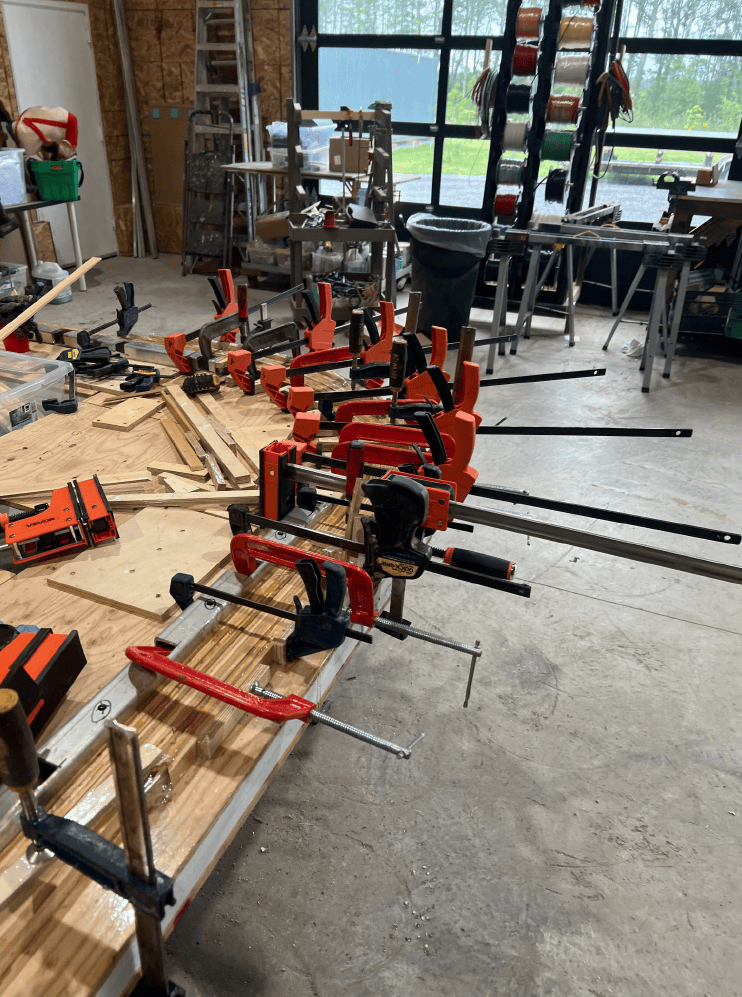
Wood components being prepared in the local workshop.
Our straightforward description is that the SNØ is designed and assembled in Eastern Ontario using important components made in Québec, with some materials and components from other sources. If a brand uses the broader “Made in Canada” wording, ask for the basis of that claim and how it describes imported content. A good builder should welcome the question and show you the work behind the answer.
For more on country-of-origin claims: Competition Bureau Canada, “Product of Canada” and “Made in Canada” Claims.