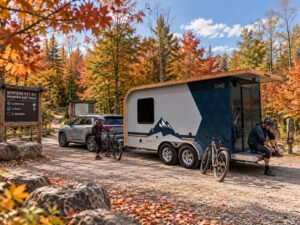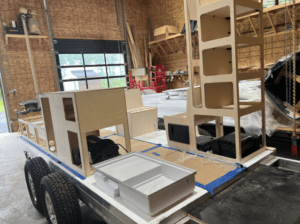



Not every trailer sold as “four-season” is genuinely built for Canadian winters. Many models on the market come with a winter package that changes very little in practice. If you plan to use your trailer when temperatures drop below -20 °C in Quebec, you need to know exactly what to look for, and more importantly, which numbers to demand. This article gives you the real criteria, not marketing language.
R-Value: The Number Everyone Mentions but Few Actually Understand
R-value measures a material’s resistance to heat flow. The higher the number, the less heat escapes, and the less your heating system has to work. In a standard trailer, sidewall insulation typically ranges from R-3.6 to R-4.7, which is nowhere near enough to spend a night at -25 °C. A true four-season trailer reaches R-10 or higher in its walls, and some Canadian arctic models with 3-inch-thick sidewalls can reach R-37, a massive difference when temperatures drop.
What matters isn’t just the walls. The floor is often overlooked, but it’s a critical surface, cold rises from frozen ground constantly. The roof is the most significant heat-loss zone since heat rises. And windows, even double-pane ones, remain weak points if the frame doesn’t have a proper thermal break. A well-insulated trailer is a complete system, not just a single number in a brochure.
Propane or Diesel: Which One Actually Heats Better in Winter?
This is one of the most important and least well-explained questions in the industry. Propane is convenient and widely available, but it has a key weakness that few dealers mention: at very low temperatures, propane struggles to vaporize properly, which directly reduces heating performance. Diesel works reliably even in extreme cold, and the numbers make the case clearly.
A propane furnace operates at 58–60% efficiency, meaning 40 to 42% of the BTUs produced go out the exhaust as waste heat. A diesel heater reaches 85–92% efficiency, nearly all the heat stays inside. Over a full winter season, that difference in efficiency translates into considerably lower fuel consumption.
Propane Adds Moisture, Which Makes Condensation Worse
One detail few people mention: open-combustion propane furnaces produce water vapour as they burn. That extra humidity ends up directly in your trailer’s air. A diesel heater, with its sealed combustion chamber vented outside, adds zero moisture to the interior air. It’s not just a cost question, it’s also a question of your trailer’s long-term health.
Condensation: The Silent Problem That Causes the Most Damage
Condensation forms when warm, humid interior air comes into contact with cold surfaces. In a winter trailer, that means water on your windows, walls, and cabinets. Left unchecked, it leads to mold, wood rot, and serious structural damage. The tricky part is that condensation often comes from completely normal activities: cooking, showering, breathing through the night, or bringing in wet gear after a day on the slopes.
The good news is it’s preventable. Running a dehumidifier continuously is the top solution, it’s simple, effective, and inexpensive to operate. Active ventilation during and after cooking and showering also makes a significant difference. And as covered above, choosing diesel over propane eliminates one major source of humidity at the root.
Freeze Protection: Pipes, Tanks and Fittings
A plumbing system that freezes often ends a trip early, and can mean thousands of dollars in repairs. A true four-season trailer needs its pipes protected even while the heater is running, because unheated zones under the floor can reach temperatures well below zero. Integrated heat trace wiring on the plumbing, insulated or heated water tanks, and a drain access point that remains usable in deep cold, these are details that seem secondary until the moment they aren’t.
To explore the specifications of a trailer built with these criteria from the ground up, check out the SNØ specifications and pricing, an arctic caravan manufactured in Ontario, designed for Canadian winters.