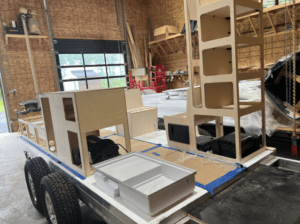


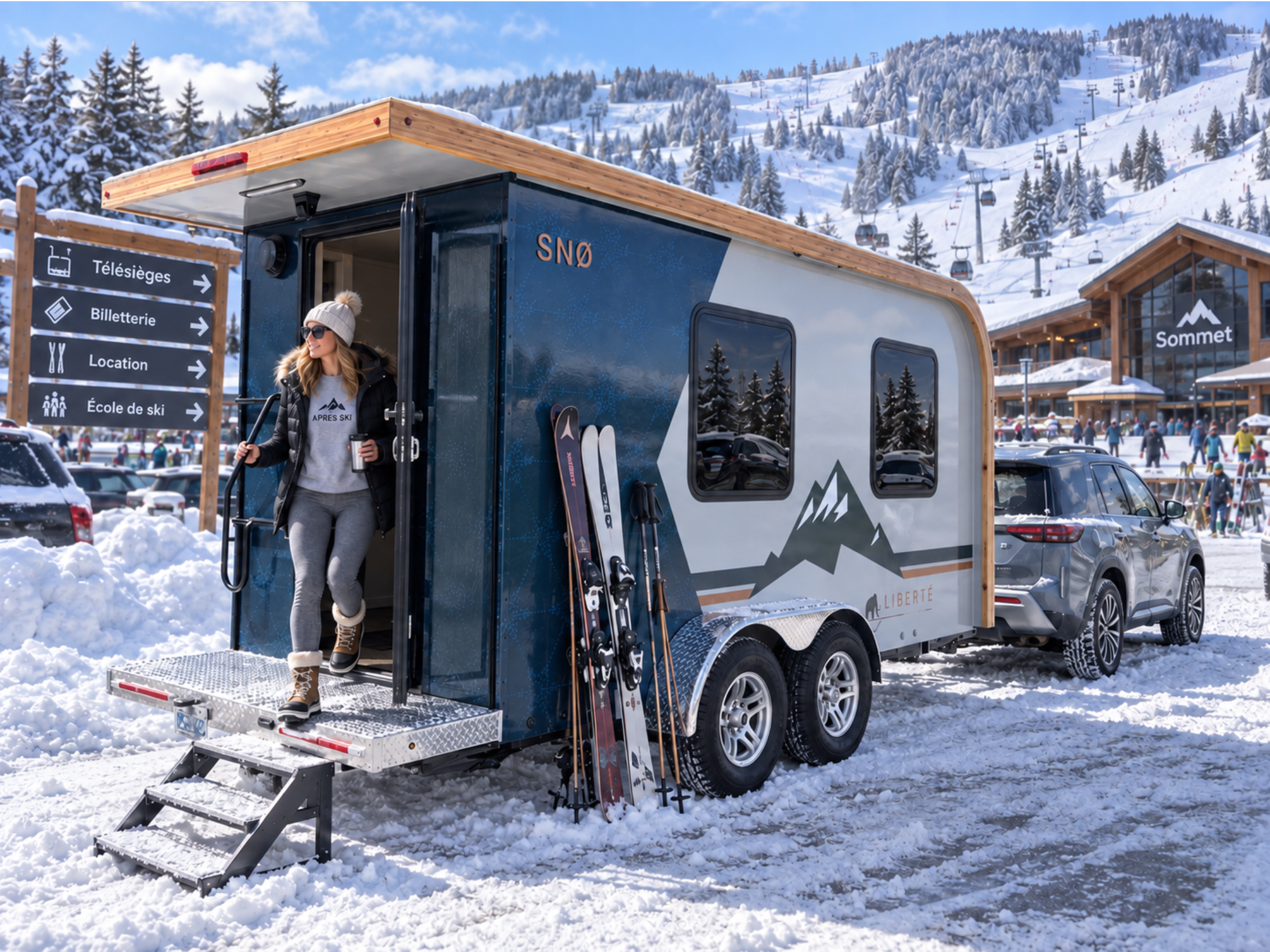
When comparing recreational vehicles, people often focus on visible features such as the floor plan, appliances, storage and interior finishes. In winter, however, the most important component is largely hidden: the building envelope.
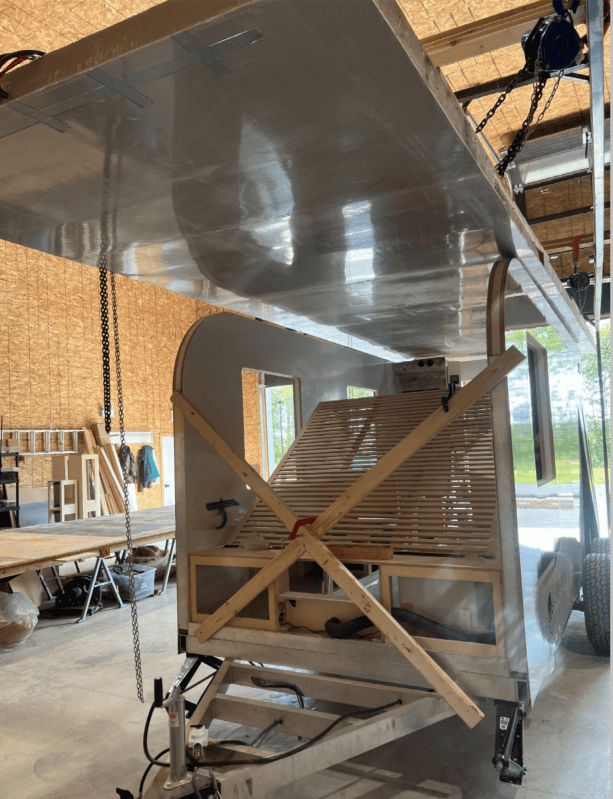
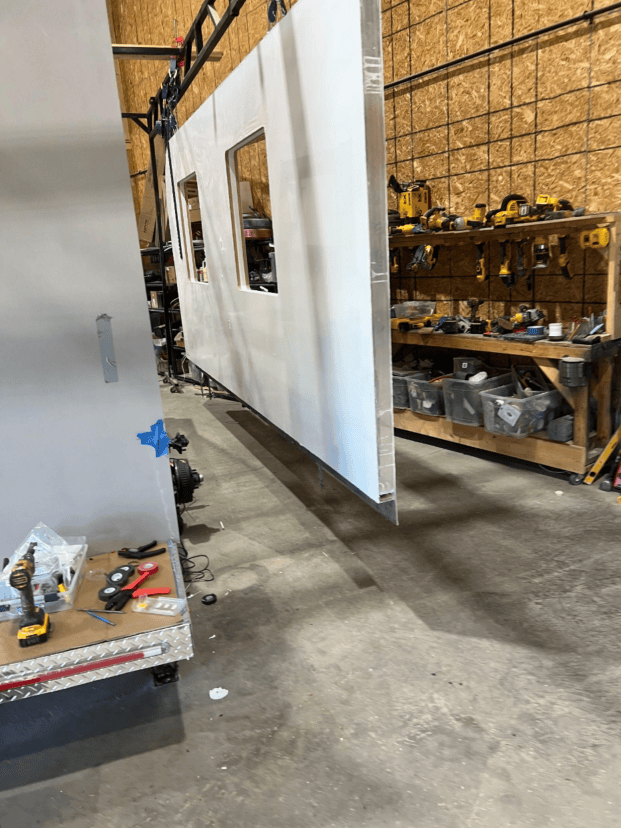
The SNØ’s walls, roof and floor are not simply surfaces containing insulation. Together, they form an integrated structural and thermal system that protects the occupants, supports the trailer and separates the warm interior from the cold exterior.
MORE THAN AN INSULATED WALL
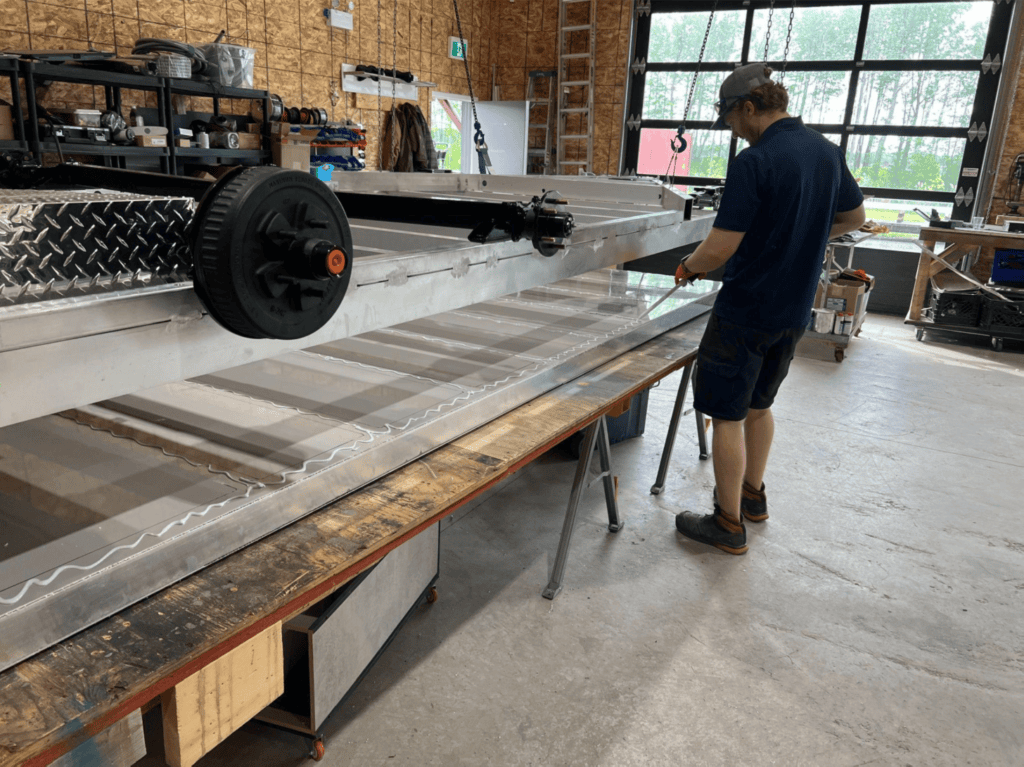
In conventional construction, walls may be supported by a separate structural frame. In the SNØ, the wall assembly is itself an important part of the structure.
The walls work with the roof and floor to create a strong, unified enclosure capable of resisting the forces experienced during towing. The system must withstand vibration, road impacts, wind loads and the twisting forces that occur when the trailer travels over uneven terrain.
It must also support windows, doors, cabinetry and other equipment without compromising the thermal envelope.
This means that structural strength, insulation and weather protection cannot be designed independently. Every material and connection must contribute to the performance of the complete system.
THE EXTERIOR LAYER: PROTECTION FROM WINTER CONDITIONS
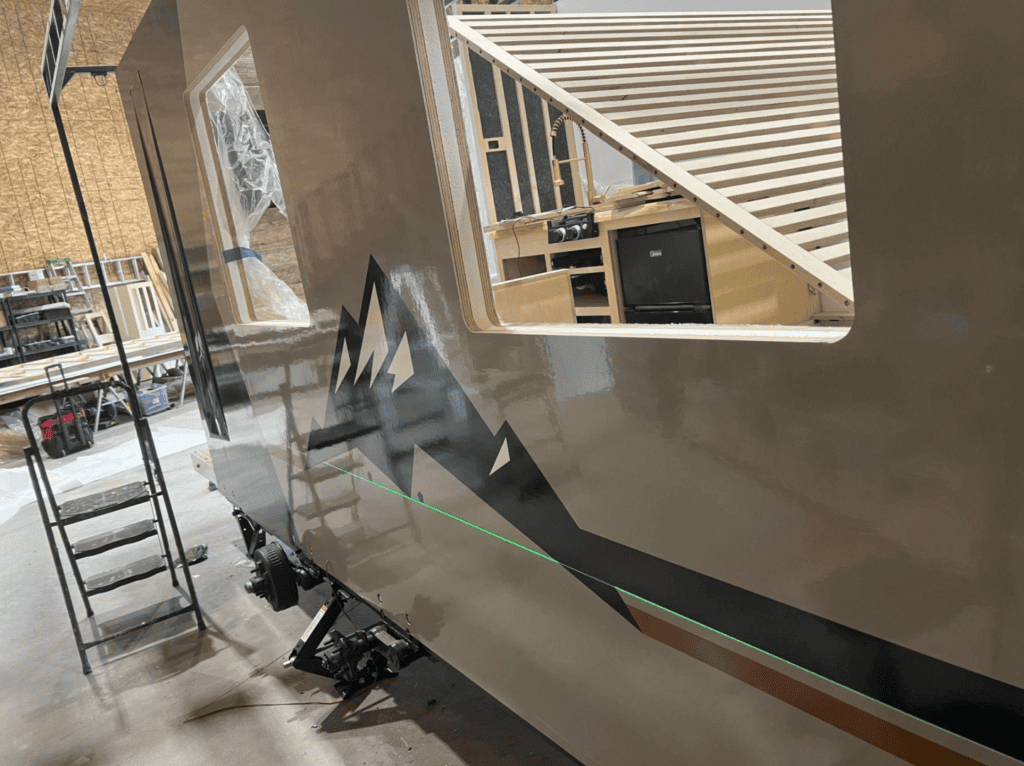
The exterior surface is the SNØ’s first line of defence against snow, rain, ice, road spray and ultraviolet exposure. Its effectiveness depends not only on the exterior panels, but also on the seams, edges, fasteners and penetrations.
Water must be directed away from the trailer rather than becoming trapped around trim or inside joints. This is especially important during repeated freeze-and-thaw cycles, when moisture entering a small opening can freeze, expand and damage the assembly.
CONTINUOUS INSULATION
Insulation slows the movement of heat from the warm interior toward the cold exterior. However, the advertised R-value of an insulation product does not necessarily represent the performance of the complete wall.
Framing, fasteners, joints and openings can create weaker areas. Gaps or poorly fitted insulation can also allow heat to escape more quickly.
The SNØ envelope is therefore considered as a continuous system. Special attention is given to corners and to the connections between the walls, roof and floor. Maintaining insulation continuity helps reduce cold interior surfaces and creates more consistent temperatures throughout the trailer.
CONTROLLING THERMAL BRIDGES
A thermal bridge is a material or component that conducts heat more easily than the surrounding insulation. Metal fasteners, brackets, framing and window frames are common examples.
Because a trailer must also be structurally strong, conductive materials cannot always be eliminated. The challenge is to use them strategically and reduce direct pathways between the warm interior and the cold exterior.
Reducing thermal bridges matters because even a small number of high-conductivity pathways can significantly affect the overall performance of an otherwise well-insulated wall, and create cold spots on interior surfaces that contribute to condensation. When evaluating any four-season trailer, it is worth asking how the manufacturer has addressed thermal bridging in the design, not just what insulation material is used.