The Liberte Journal

The Real Criteria of a Four-Season Trailer: Insulation, Heating and Condensation

Not every trailer sold as “four-season” is genuinely built for Canadian winters. Many models on the market come with a winter package that changes very little in practice. If you plan to use your trailer when temperatures drop below -20 °C in Quebec, you need to know exactly what to look for, and more importantly, which numbers to demand. This article gives you the real criteria, not marketing language.   R-Value: The Number Everyone Mentions but Few Actually Understand R-value measures a material’s resistance to heat flow. The higher the number, the less heat escapes, and the less your heating

Read More

SNØ vs Safari Condo Alto: Which Camper Profile Are You?

Two trailers made in Canada, two completely different philosophies. The Safari Condo Alto has built its reputation on a distinctive aerodynamic design, lightweight aluminum construction, and a fiercely loyal community of owners. The SNØ from Liberté Caravans was built for an entirely different reality: camping comfortably in a Canadian winter, without compromise. So how do you choose between the two? It all comes down to who you are as a camper.   The Safari Condo Alto: For the Three-Season Camper Who Wants to Travel Light The Safari Condo Alto stands out immediately for its look. Made in Saint-Nicolas, Quebec, the

Read More

Can You Camp in Winter with a Trailer? A Complete Beginner’s Guide

It’s a question that comes up all the time, especially among people just discovering the world of recreational vehicles: is it actually possible to camp in winter with a trailer in Quebec? The short answer is yes, but not with just any trailer, and not without a minimum of preparation. If you’re curious and don’t know where to start, this guide is for you. And if you’re looking for an arctic caravan built for Canadian winters, Liberté Caravans can help.    The Difference Between a Three-Season and a Four-Season Trailer This is the first thing to understand before anything else.

Read More

SNØ vs. Airstream: Two Premium Trailers, One Built for Canadian Winters

Airstream is one of the most recognized names in travel trailers. The aluminum shell has been rolling down North American roads since the 1930s, and for good reason, it’s durable, it holds its value, and it carries a culture of adventure that few brands can match. The SNØ is newer, quieter, and Canadian. It was built by a mechanical engineer who spent years working on radar sites in the Canadian Arctic, and who couldn’t find a trailer that worked properly in a Quebec January. So he built one. Learn more about SNØ travel trailer. These are both premium trailers. Neither

Read More

SNØ vs. a Mainstream Travel Trailer: What Actually Differs

Most travel trailers sold in Canada are built for summer. They ship with a thin insulation package, exposed plumbing, and a furnace that struggles below −10 °C. When winter camping enthusiasts push those trailers into January, the pipes freeze, the heating can’t keep up, and the experience ends early. The SNØ travel trailer is engineered the other way around, starting with Canadian winter as the baseline, not an afterthought.   R-20 Insulation, From Wall to Floor to Ceiling A standard three-season trailer runs R-7 to R-11 in the walls. The SNØ delivers R-20 throughout, walls, floor, and ceiling, the same

Read More

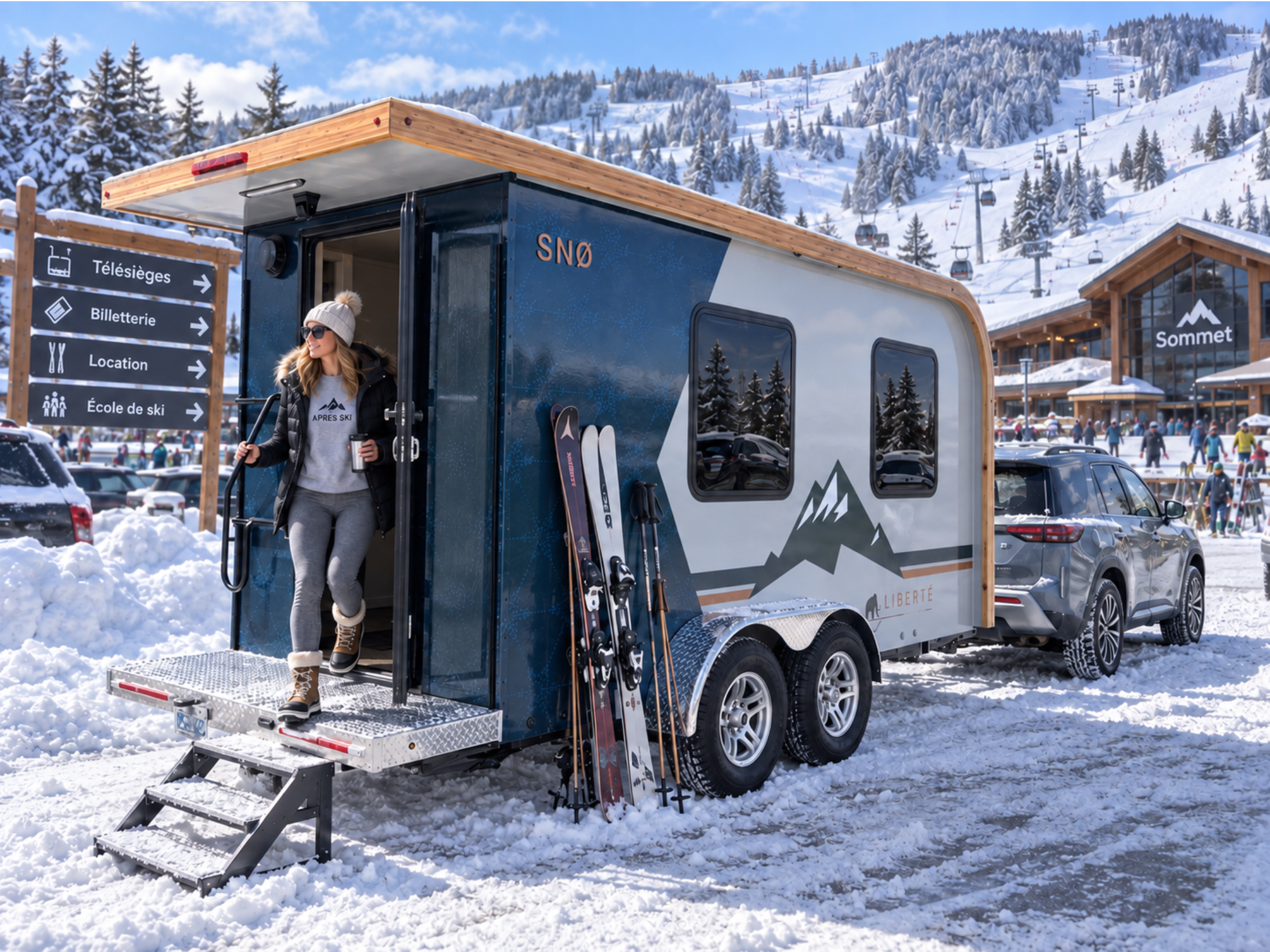
How to Choose a Four-Season Trailer for Skiing in Quebec

Picture this: it’s -20°C outside, the snow squeaks under your boots after a full day on the slopes at Mont-Tremblant, and instead of driving two hours home in the dark, you’re thirty feet from the lift, sinking into a hot shower before dinner. That’s the promise of a four-season trailer – but only if it’s actually built for a Quebec winter, not just labeled for one. Quebec’s ski season is long and genuinely cold, from Mont-Sainte-Anne and Le Massif de Charlevoix to Stoneham, Bromont, and Owl’s Head. A trailer that’s fine for fall camping in Ontario can turn into an

Read More