

A genuine four-season travel trailer costs more than a three-season model, sometimes significantly more. For a buyer standing in a dealership comparing price tags, that gap is hard to ignore. But the more useful question isn’t whether four-season trailers cost more. It’s whether that cost is justified for your specific situation. The answer depends on how and where you camp, and on understanding what you’re actually paying for.
What You’re Actually Paying For
The price difference between a three-season trailer and a genuine four-season model reflects real engineering decisions: thicker insulation throughout walls, floor and roof, a heating system designed to operate efficiently below -20 °C, freeze-protected plumbing with integrated heat trace wiring, sealed underbelly construction, and double-pane windows with thermal breaks. These aren’t cosmetic upgrades, they’re structural and mechanical systems that either work in sustained cold or don’t.
A three-season trailer with a winter package typically adds heated tanks and perhaps some extra insulation in the walls. A purpose-built four-season trailer integrates cold-weather performance into every component from the start. The difference between the two is the difference between a trailer that can handle a cool October night and one that can hold a comfortable interior temperature through a January week in the Laurentians. Our post on the real criteria of a four-season trailer covers exactly what those differences look like technically.
When the Extra Cost Is Clearly Worth It
The math gets straightforward when you think about frequency. If you camp two or three times in spring and fall, a quality three-season trailer may serve you well. But if you want to use your trailer in Canadian winter, ski weekends, cross-country skiing trips, shoulder-season escapes when provincial campgrounds are quieter and less expensive, the calculus changes.
A three-season trailer used in winter conditions degrades faster: condensation damages insulation and structure, plumbing failures are costly to repair, and the heating system works overtime in ways it wasn’t designed for. Over three to five seasons, the cost of repairing and compensating for a trailer not built for winter use can exceed the initial price difference between the two options. For buyers who plan to camp year-round in Canada, a four-season trailer is the financially rational choice over a long enough time horizon.
The Hidden Costs of a Three-Season Trailer in Winter
Most buyers who regret not buying a four-season trailer don’t realize the cost until after the fact. Burst pipes from a single cold night where the heating system struggled. Delaminating wall panels from a season of condensation. A furnace that failed at -15 °C because it wasn’t rated for sustained operation at those temperatures. These aren’t hypothetical scenarios, they’re common outcomes when a three-season trailer is pushed into winter conditions it wasn’t designed for.
There’s also the opportunity cost of not being able to use the trailer. A four-season trailer is an asset that earns value every month of the year. A three-season trailer sits unused from November to April, roughly a third of the calendar, while the owner still pays insurance, storage, and depreciation. For buyers who want to maximize the utility of their investment, a four-season trailer’s higher upfront cost is partially offset by a much longer active season.
What “Four-Season” Actually Means, and What It Doesn’t
Not every trailer sold as “four-season” is worth the premium. The term isn’t regulated in Canada, which means manufacturers apply it freely regardless of actual cold-weather performance. A trailer with a four-season label and R-7 wall insulation is not the same as one with R-20 insulation and integrated freeze protection. Paying more for a four-season label without verifying the underlying specifications is not a sound investment.
Before paying a premium for four-season capability, verify the actual R-values on all surfaces, ask how plumbing is protected, confirm the heating system’s rated operating temperature, and ask for references from owners who use the trailer actively in winter. Our post on how to know if a travel trailer is truly four-season gives you the specific questions to ask before committing.
The Resale Value Argument
Four-season trailers from quality manufacturers tend to hold their value better than three-season models, particularly in Canadian markets where winter capability is a meaningful differentiator. A trailer that has been used in winter and maintained properly retains more of its structural integrity than one that has been pushed beyond its design limits. When the time comes to sell, a genuinely winter-capable trailer from a reputable Canadian manufacturer commands a stronger resale position than an equivalent three-season model with a winter package.
The SNØ: Is It Worth It?
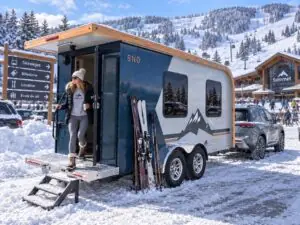
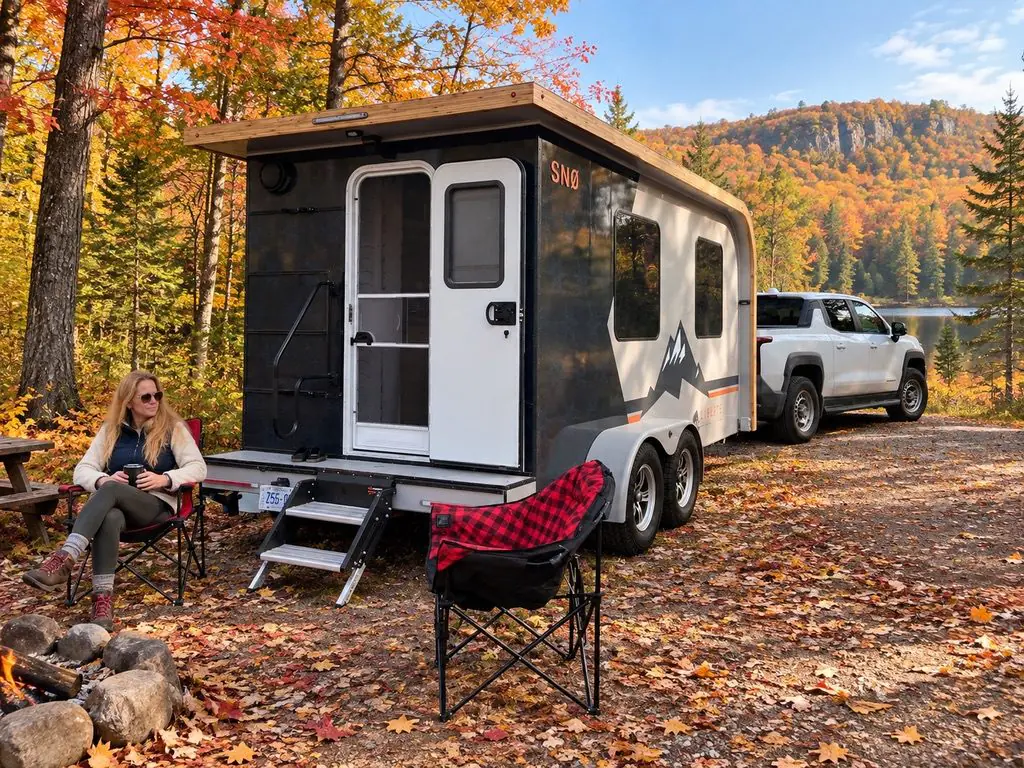
The SNØ from Liberté Caravans is positioned at the premium end of the Canadian four-season trailer market. It’s not the cheapest option, and it’s not designed to be. It’s built by a Canadian engineer for Canadian winter conditions, with R-20 insulation throughout, a five-year warranty, and a heating system designed for sustained below-zero operation. For buyers who plan to camp year-round in Canada, it represents a different value calculation than a summer trailer with upgraded insulation.
The right question isn’t whether the SNØ costs more than a three-season trailer. It does. The right question is whether the capability, longevity, and year-round utility justify the difference for your specific camping plans. Explore the full specifications and pricing to make that comparison on your own terms, or book a visit to see it in person.