

Buying a travel trailer is a long-term investment, and Canadian winters are one of the most demanding environments a trailer can operate in. Road salt, sustained below-zero temperatures, freeze-thaw cycles, heavy snow loads, and the mechanical stress of towing on winter roads all accelerate the aging of materials and components. A trailer that holds up well over ten or fifteen Canadian winters isn’t just well-maintained. It was built differently from the start.
This post isn’t about what to look for when shopping. It’s about understanding the durability factors that separate a trailer that looks the same after a decade as it did on delivery day from one that shows its age, and shows its limitations, within a few seasons of winter use.
The Frame: Where Durability Starts
The structural frame is the foundation of everything else in the trailer. In Canada, the frame’s primary long-term adversary is road salt, spread liberally on highways from November through March and capable of accelerating corrosion in steel frames significantly over time.
Steel frames are strong and widely used, but untreated or inadequately coated steel corrodes in road salt conditions. Galvanized steel, steel that has been hot-dip galvanized or coated with a zinc layer, offers significantly better corrosion resistance. Aluminum frames avoid the rust problem entirely, but aluminum still corrodes in certain conditions, particularly where dissimilar metals meet at fasteners and joints without proper isolation.
Whatever the frame material, ask about the anti-corrosion treatment and how it should be maintained. Ask whether the underbelly protects the frame from direct road spray exposure. A frame that has been properly protected and inspected annually can last decades. One that hasn’t been treated or maintained may show structural degradation within five to seven years of regular winter use.
The Exterior Shell: Sealing Against Moisture
Water is the primary enemy of trailer longevity, not in liquid form, but as moisture that finds its way into wall assemblies through failed seals, damaged caulking, or poorly designed joints. Once moisture is inside a wall, it degrades insulation, promotes mold growth, and can cause structural delamination that’s expensive to repair and difficult to reverse.
In Canadian winters, the moisture risk is compounded by freeze-thaw cycles. Any water that has found its way into a wall assembly expands when it freezes, widening gaps and accelerating damage. A small seal failure that causes a slow drip in summer can cause significant structural damage over a winter of repeated freezing and thawing.
Durable trailers address this at the design level: continuous, fully bonded exterior panels rather than riveted seams where water can wick; window and door frames that are sealed and re-sealable; and a design philosophy that treats every joint and penetration as a potential moisture entry point. Annual inspection and resealing of any exterior caulking is the most important maintenance task for trailer longevity in Canadian conditions.
Insulation: What Degradation Looks Like Over Time
Insulation doesn’t last forever, and in a trailer that’s used in winter conditions, the degradation timeline matters. Fiberglass batt insulation can settle and compress over time, reducing its effective R-value. If moisture has gotten into the wall assembly, wet fiberglass insulation loses most of its thermal performance and becomes a breeding ground for mold.
Rigid foam insulation, polyisocyanurate or extruded polystyrene, performs better in wet conditions and holds its R-value more consistently over time. It’s also less susceptible to compression. In a trailer that will be used in Canadian winters for many years, the type and installation method of the insulation is a durability question, not just a performance question.
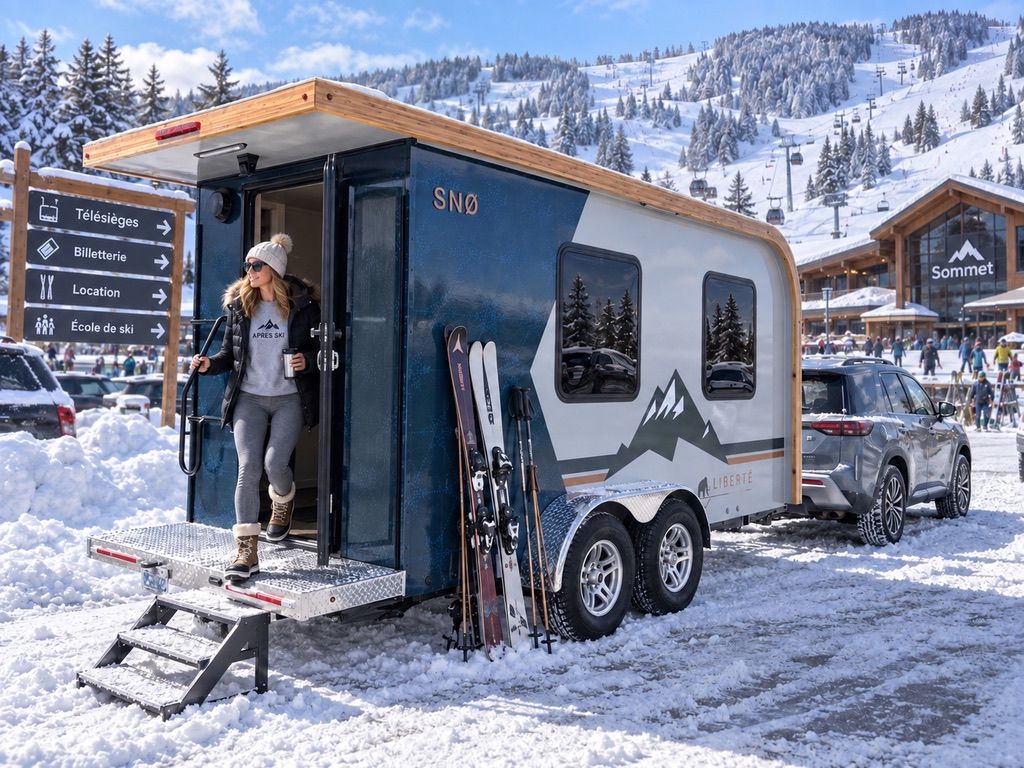
Condensation inside the wall which occurs when warm interior air moves through the wall and reaches a surface cold enough to condense is a slower and harder-to-detect form of insulation degradation. A trailer with a proper vapour barrier and continuous air sealing throughout the envelope resists this degradation better than one without. This is one of the reasons why the construction approach behind the SNØ treating the entire envelope as an integrated thermal and moisture system matters for long-term durability, not just short-term performance.
The Plumbing System: Durability Under Freeze-Thaw Stress
Plumbing failures in winter are the most common cause of serious damage in trailers used beyond three-season conditions. A single freeze event can split a pipe or crack a tank, damage that may not be immediately visible but that leads to water infiltration in the wall or floor over subsequent trips.
Trailers built for long-term Canadian winter use address plumbing durability at the design stage: pipe materials rated for freeze-thaw cycling, tank placement inside the heated envelope wherever possible, and heat trace wiring that protects the most vulnerable sections. But even the best-designed system requires maintenance: flushing the system completely before extended cold periods, inspecting heat trace wiring before each winter season, and checking tank seals annually.
Proper winter maintenance protocols provided by a manufacturer who builds for year-round use extend the plumbing system’s service life significantly. Our post on SNØ vs. a mainstream travel trailer shows exactly how plumbing protection differs between a purpose-built winter trailer and a conventional model.
The Heating System: Long-Term Reliability in Cold Conditions
A heating system that runs intermittently in shoulder-season conditions ages very differently from one that operates continuously through Canadian winters. Propane furnaces cycled hard in sustained cold experience more wear on their ignition systems, heat exchangers, and fans than those used occasionally. Diesel heaters are simpler mechanically, fewer moving parts, no pilot light, sealed combustion, which tends to translate to longer service intervals and lower lifetime maintenance costs.
Regardless of system type, annual servicing before each winter season is essential for a heating system used in demanding conditions. Combustion chamber inspection, filter cleaning, and seal checking are tasks that prevent small issues from becoming heating failures at -20°C when the consequences are most significant. A manufacturer who builds specifically for winter use, and who can provide maintenance protocols based on actual winter operating experience, is a better resource for this than a general RV service centre. Our post on the real criteria of a four-season trailer covers heating system selection and its long-term implications in detail.
Maintenance Habits That Extend Trailer Life
Construction quality sets the ceiling for how long a trailer can last. Maintenance habits determine how close to that ceiling the trailer actually performs over its lifetime. In Canadian winter conditions, the most important maintenance practices are annual resealing of all exterior caulking and seams; full plumbing system flush before any period of unheated storage; inspection and testing of heat trace wiring before the first cold trip of each season; washing the underbelly and frame to remove road salt accumulation after winter trips; and annual inspection of the heating system by a qualified technician.
A trailer built for Canadian winter use comes with maintenance protocols designed around how it will actually be used. Liberté Caravans provides owners with guidance specific to year-round Canadian operation, not generic RV maintenance advice adapted from a summer-camping context. If you want to see the construction quality that underlies these protocols, explore the SNØ specifications or book a visit to inspect the trailer in person.