

A “four-season” label can sound like a promise that an RV is ready for a Canadian winter. In practice, it may mean a trailer designed mainly for warmer weather has added insulation and heated tanks to extend its use into occasional sub-zero conditions. For sustained winter camping, look beyond the label: where are the water systems, what happens when the heat stops, and how does the entire enclosure hold warmth?
Where the Water Systems Live
In many conventional travel trailers, tanks, drains or plumbing run beneath the living floor. An enclosed underbelly and tank heaters can protect these components while the heaters have power and the trailer is operating as intended. Disconnect the power or heat in freezing weather, however, and exposed or poorly protected water can freeze quickly. A burst line, fitting or tank can leave significant damage when it thaws.
The SNØ takes a different approach. Its water systems are located above the sealed, insulated floor, inside the protected envelope. This keeps vulnerable components on the warm side of the floor during use. It also removes the same dependence on underfloor tank heaters. No water-filled trailer is immune to a prolonged loss of interior heat: if left unheated long enough in sub-zero weather, the interior and its systems can eventually freeze. There is a requirement to remove water for extended unattended storage, but with the SNØ trailer, this is made simple with an onboard compressor pre-connected to the plumbing. Winterizing is a 30-second activity that happens with the flip of a switch.
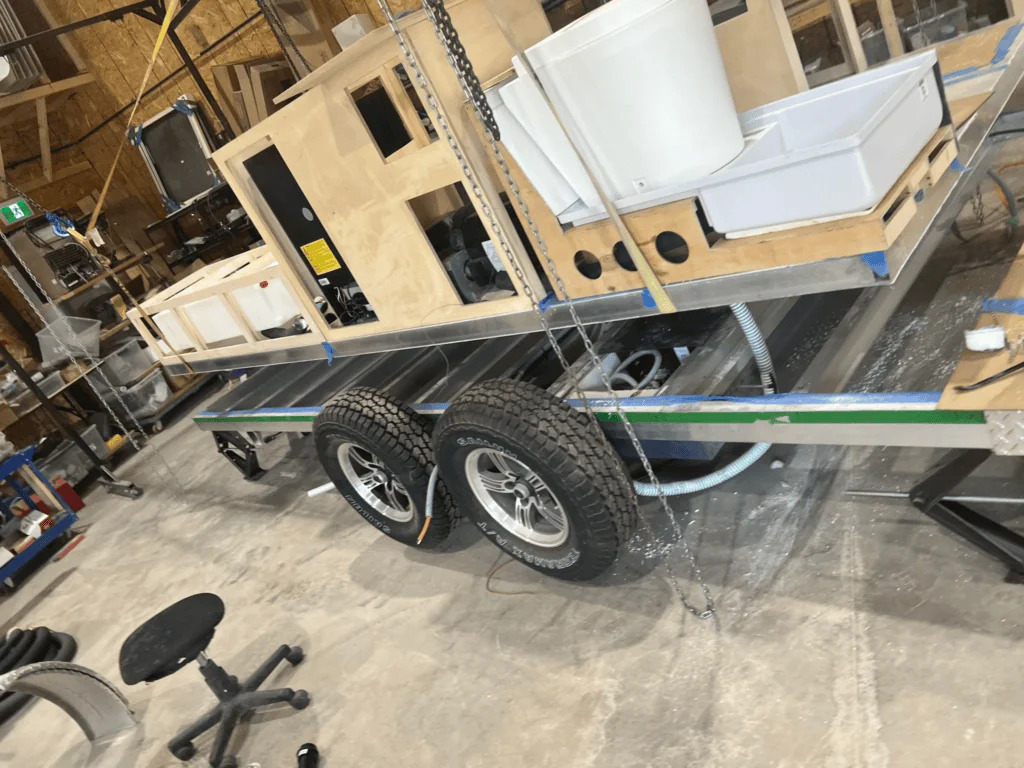
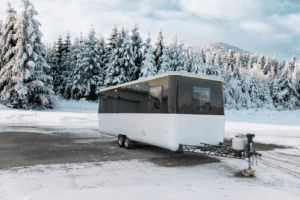
Image: SNØ systems and interior structure during construction.
The Envelope Is a Complete System
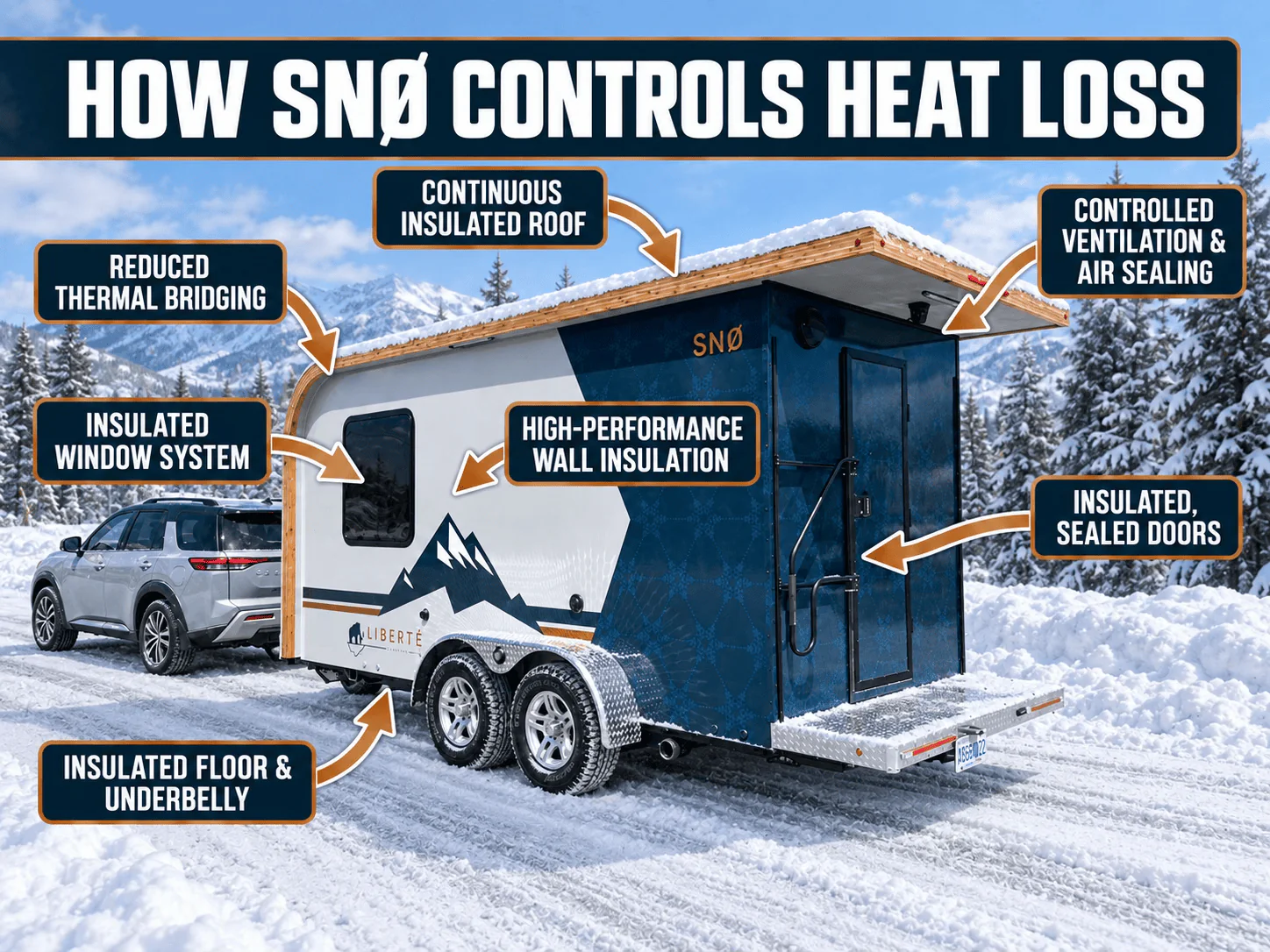
A winter-ready trailer needs more than a heater capable of warming the cabin. Its walls, roof, floor, windows, doors and joints must work together as a sealed, insulated enclosure. In the SNØ, the 3½-inch wall assembly is part of this structural and thermal system. A typical lightweight four-season trailer may have walls closer to 1¼ inches thick, although construction varies by model. Thickness alone does not establish an R-value: insulation material, thermal bridges, air leakage and installation also matter.
Better insulation and air sealing help keep interior surfaces warmer and temperatures more even. That can reduce the condensation that forms when warm, moist indoor air meets a cold surface. Occupants still create moisture by breathing, cooking and drying gear, so ventilation and humidity control remain necessary. The SNØ is designed to regulate indoor temperature while limiting heat loss through the whole envelope. Our post on the real criteria of a four-season trailer covers each component of the thermal envelope in detail.
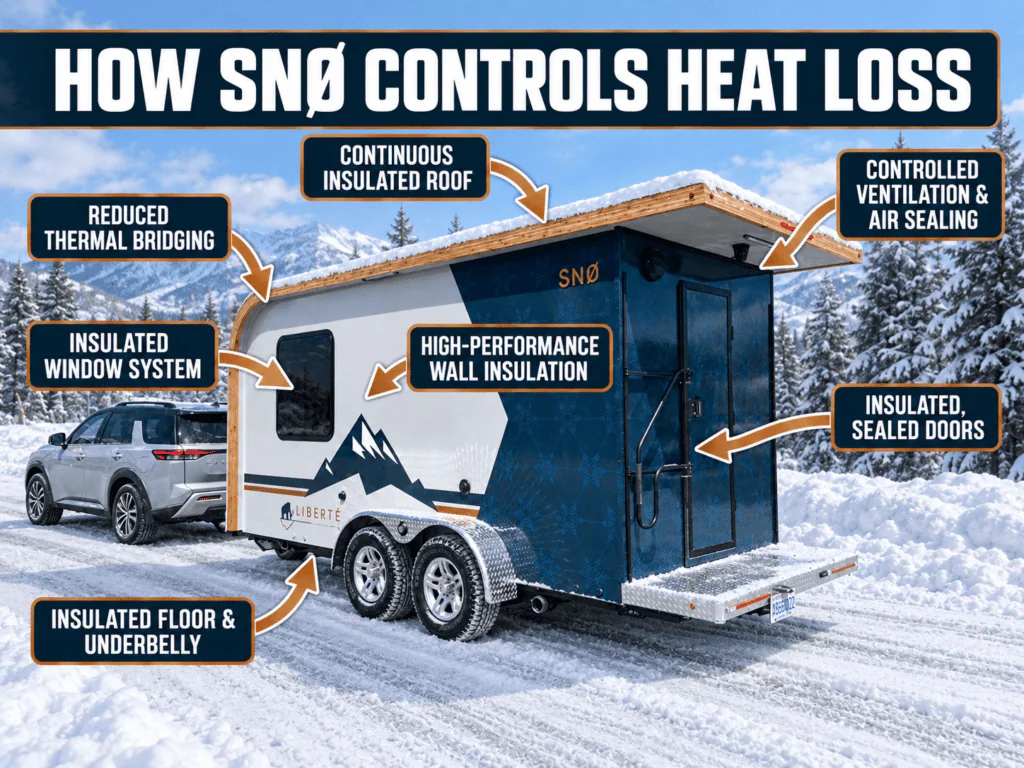
Image: The SNØ envelope addresses heat loss at the roof, walls, windows, doors and floor.
What This Means at the Campsite
Less heat escaping means less fuel needed to maintain comfort. Under favourable conditions, the SNØ can heat its cabin in sub-zero weather for up to 20 days on a single 20 lb propane tank. Actual duration depends on the outside temperature, thermostat setting, wind, ventilation and other propane appliances in use.
When comparing trailers, ask the dealer to show you the plumbing and tanks, identify what requires electrical heat, and explain what happens during a power interruption. Then inspect how the floor, walls and roof connect. These details reveal far more about winter readiness than a “four-season” badge. To understand what to look for at every step of the comparison, our post on common mistakes when buying a four-season trailer covers the most frequent oversights buyers make. Explore the full SNØ specifications or book a visit to see the construction in person.